
 Moto, ATV parts
  Electric trike mobility scooters, electric four-wheel mobility scooters
  Electric scooters, electric trike scooters, mopeds, electric kick scooters
  Motorcycles
  ATV's
ATV's  Fuel and electric kick scooters
  Electric bicycles
  Wheelchairs, trailers
  Maintenance materials
  Motorcyclist outfit
  Floor washing and sweeping machine
  Accessories
  Special moto tools
  Garden machinery parts
  Auto spare parts
  Metal polishing materials
  Kids car
  Boat engine parts
  Electric motors
 Motorized bicycle parts
 Electrical parts
 Light bulbs
 Tyres
Tyres Levers
 Drive gear parts
 Exhaust system
 Lights
 Tuning
 Engine parts
 Petrol engines
 Motorized bicycle engines 2T and 4T
 Brakes
 Electric ATV parts
 Bicycle parts
 Fuel system
 Stickers
 Chassis, body
 Kick scooter parts
 Wheelchair trailer parts
 Chargers
 Batteries
 Plastic covers
 Speedometer drive gear
 Wind deflectors
 Fasteners and screws
 Motorized bicycle clutch
 Motorized bicycle ignition system
 Motorized bicycle cylinder parts
 Motorized bicycle shaft, block
 Relays, fuses
 Key switches
 Dashboards
 Ignition coils
 Alarm systems
 Voltage regulators
 Sensors
 CDI controllers
 Switches
 Wiring
 Speedometers, tachometers
 Controllers
 Relays
 Sound signals
 Tyre accessories
 Scooter tyres
 Inner tubes
 Motorcycle tyres
 ATV tyres
 Bicycle tyres
 Kick scooter tyres
 Clutch levers
 Throttle levers
 GRIPS
GRIPS Brake levers
 Axles
Axles Shock absorbers
 Bearings for chassis
 Steering rods
 Hub bushes
 Chains
 Wheels
 Ball joints
 Forks, swing arms
 Hubs
Hubs Wheel spokes
 Sprokets
 Drive shaft crosses
 Turn signal lights
 Headlights
 Tail lights
 Additional LED lights
 Spark plugs
 Kick start levers
 Gearboxes and gearbox components
 Variator, gear parts
 Timing chains
 Covers, caps
 Camshafts
 Pumps
Pumps Engine valves
 Clutches
 Engine heads
 Starters
 Crankshafts
 Oil seals for engine
 Engine gaskets
 Engine pistons, rings
 Engine cylinders
 Electrical parts
 Gear levers
 Drive belts
 Variator roller weights
 Oil filters
 4-stroke engine 50CC
 154FMI engine parts
 156FMI engine parts
 162FMJ engine parts
 AM6 engine parts
 LIFAN 120 engine parts
 LIFAN 86 engine parts
 XY140 engine parts
 YX160 engine parts
 ZS154FMI-2 engine parts
 Brake hose
 Brake pads
 Brake discs, drums
 Brake system
 Brake levers
 Brake caliper repair kits
 Other parts of brake system
 Engines
 Electric parts
 Levers
 Bicycle accessories
 Batteries
 Lights, electrical components
 Wheels, their parts
 Levers
 Frame parts, handlebars
 Engines, electrification kits
 Thruster, gear system
 Brakes
 Helmets of bicycle
 Cycling gloves
 Fuel taps
 Fuel tank caps
 Tanks
Tanks Intake manifolds
 Air filters
 Carburators
 Fuel hoses
 Fuel filters
 Carburetor repair kits, parts
 Cables
 Fans, radiators, cooling
 Handlebars, handlebar mount
 Footrests
 Mirrors
 Seats
Seats Side stands
 Sliders and axle frame protectors
 Lead acid battery
 Lithium ion battery
 Plastic covers for ATVs
 Plastic covers for motorcycles
 Gas scooters, mopeds, motorcycles
 Electric scooters
 Electric scooters
 Cross motorcycles
 Street motorcycles
 Cross motorcycles for kids
 Petrol ATV's
 ATV's for kids
 Electric ATV's
 Wheelchairs, trailers
 Electric wheelchairs
 Lubricants
 Engine performance improvement, recovery additives
 Sandpaper
 The smells
 COVID 19 products
 Apsaugos priemonės
 Body repair materials
 Adhesives, sealants
 Sound insulation goods
 Maintenance goods
 Painting supplies
 Liquids
 Transmission oil
 Motor oil for 4-stroke engines
 Fork, shock absorber oil
 Chains maintenance
 Motor oil for 2-stroke engines
 Air, fuel, electrical, brake system maintenance
 Sealants, screw retainers
 Other oils
 Consistency oil
 Food grade oil
 Industrial oil and lubricants
 Dezinfectant, 1 L
 DEZINFECTANT, 5 L
 Paint
Paint Paint removers
 Putty
Putty Anti-corrosion agents
 Primers
 Rust modifiers
 Thinners
 Covering
 Washing goods
 Interior cleaning
 Waxes
Waxes Polishing, surface renewal
 Coolants
 Window fluids
 Brake fluid
 Clutch fluid
 Helmets
 Goggles
 Gloves
 Accessories
 Boots
Boots Shirts
 Pants
Pants Helmet accessories
 Moto jackets
 Vest
Vest Service hour meters
 Bike Covers
 License plate holders
 Reflectors
 Backrests for motorcyclists
 Moto storage boxes and bags
 Motorcycle communication equipment and accessories
 Gifts for motorcyclists
 Moto keychains
 Cargo fastening net
 Pulling winches
 Flashlights
 Moto backpacks
 Camping equipment
 Motorcycle theft protection
 Fuel tank trim
 Valve caps
 Hand tools
 Electric tools
 Knives
 Moto lifts and ramps
 Work gloves
 Chain saw parts
 Carburetors
 Trimmer parts
 Carts
Carts Repair kits
 Bicycle racks
 Tire winter accessories
 Car seats for children's
 Sandpaper
 Polishing discs
 Polishing paste
 Paint and sticker remover
 Covers for trike scooters, seats, baskets
 Electrical parts
 Light bulbs
 Levers
 Running gear parts
 Lights
 Engines
 Lights, electrican components
 Plastic covers for HAWK electric scooter
 Drive gear parts HAWK
 Gloss-primer-putty-sealants
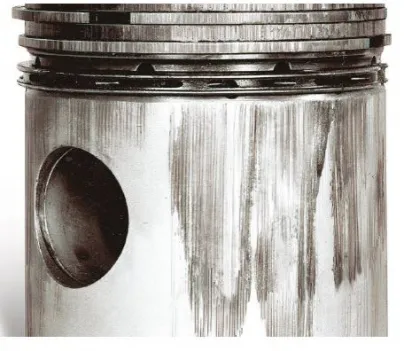
Engine Overheating – How to Identify Damage and What Causes It?
The engine of a motorcycle, ATV, or any other internal combustion vehicle operates under extremely demanding conditions. To ensure a long service life, two essential requirements must always be met: effective cooling and adequate lubrication. If either of these fails, one of the most expensive types of engine damage can occur – piston seizure.
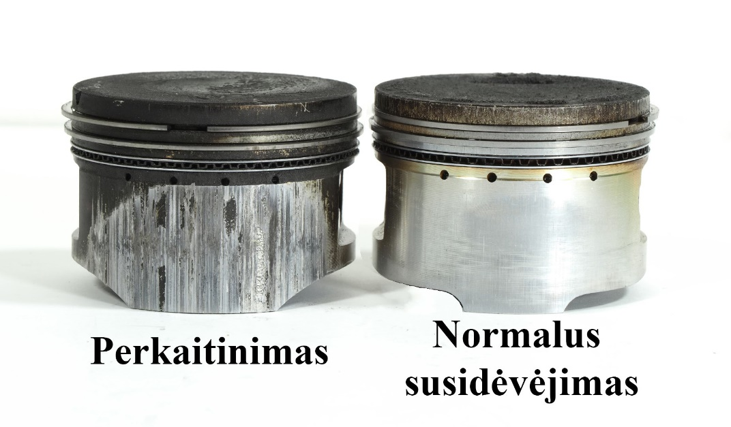
In this article, we explain how overheating damage develops, what it looks like, and the most common causes behind it.Below is a comparison of an overheated piston and a normally worn piston.
Why Does an Overheated or Poorly Lubricated Engine Seize?
Under normal operating conditions, a thin oil film is constantly maintained between the piston and the cylinder wall. This film prevents direct metal-to-metal contact.
When the engine overheats or receives insufficient lubrication:
- the lubricating oil film breaks down or fails to form;
- the piston begins to make direct contact with the cylinder wall;
- severe friction develops, creating localized hot spots with extremely high temperatures;
- the piston surface starts to melt and become heavily scored;
- eventually, the piston may seize inside the cylinder.
Overheating Around the Piston Crown
Why Does It Happen?
At excessively high temperatures, the piston expands beyond the clearance specified by the manufacturer.
As a result, the clearance between the piston and cylinder becomes almost nonexistent, causing:
- the oil film to break down;
- dry friction to occur;
- the piston to begin seizing.
Most Common Causes
- Prolonged operation under heavy load, especially during the break-in period of a new or rebuilt engine.
- Improper combustion (lean air-fuel mixture, incorrect ignition timing, etc.).
- Cooling system faults or insufficient airflow around the cylinder.
What Does the Damage Look Like?
- Damage is most severe near the piston crown and gradually decreases toward the skirt.
- Seizure marks are visible around the entire circumference of the piston crown.
- The damaged surface becomes dark, rough, and deeply scored.
- The piston rings are also damaged, although the lower oil control rings are often less severely affected.
This type of damage is generally not caused by incorrect piston-to-cylinder clearance during assembly. In most cases, it results from excessive thermal loading.
Overheating Around the Piston Skirt
Why Does It Happen?
The oil film on the cylinder wall either fails to form or disappears because the engine overheats.
As a result:
- the piston slides with little or no lubrication;
- severe scoring develops;
- the piston skirt becomes damaged or destroyed.
When damage is concentrated only on the piston skirt, it usually indicates that the failure was caused by lubrication or cooling problems rather than abnormal combustion.
Most Common Causes
In Liquid-Cooled Engines
- Low coolant level.
- Low oil level in splash-lubricated systems.
- Clogged radiator.
- Faulty water pump.
- Defective thermostat.
- Broken or slipping water pump drive belt.
- Cooling fan not operating correctly or insufficient cooling airflow.
- Faulty or incorrectly aimed piston cooling oil jets.
- Malfunctioning oil pump.
In Air-Cooled Engines
- Cooling fins clogged with dirt or debris.
- Broken cooling fins.
- Inefficient or insufficient cooling airflow.
In Two-Stroke Engines
- Insufficient oil in the fuel/oil mixture.
- Incorrect oil used in the fuel/oil mixture.
What Does the Damage Look Like?
- Characteristic vertical scoring along both sides of the piston.
- Damaged areas appear dark in color.
- The surface becomes extremely rough and heavily damaged.
- Ring lands are often melted and broken due to excessive temperature.
How Can Engine Overheating Be Prevented?
To avoid costly engine repairs, it is recommended to:
- Regularly check the engine oil level.
- Use only the engine oil recommended by the manufacturer.
- Monitor the coolant level.
- Clean the radiator and cooling fins regularly.
- Avoid placing excessive loads on a new or newly rebuilt engine.
- Repair cooling system faults immediately.
- Avoid prolonged operation at maximum load, especially in hot weather.
Advice for Vehicle Owners
When operating any vehicle, it is important to monitor not only the engine but also the condition of all supporting systems.
An overheated engine usually leaves clear evidence: dark, rough, heavily scored piston surfaces and severe damage to piston components. Such failures are typically caused by one or more of the factors described above.
These are operational failures, not manufacturing defects.
If you notice the first signs of overheating—such as loss of power, unusual engine noises, rising engine temperature, or low oil pressure—stop operating the engine immediately.
Continuing to drive, even for a short period, can turn a relatively minor problem into a complete engine seizure. Repair costs in such cases are often several times higher than fixing the original fault in time.
Jei šis straipsnis bus skirtas www.heradas.lt, galiu jį papildomai perrašyti į natūralesnę, SEO optimizuotą anglų kalbą, kad geriau reitinguotųsi „Google“ pagal raktažodžius, tokius kaip engine overheating, piston seizure, piston damage, engine lubrication failure ir overheated engine symptoms.
All news