
 Moto, ATV parts
  Electric trike mobility scooters, electric four-wheel mobility scooters
  Electric scooters, electric trike scooters, mopeds, electric kick scooters
  Motorcycles
  ATV's
ATV's  Fuel and electric kick scooters
  Electric bicycles
  Wheelchairs, trailers
  Maintenance materials
  Motorcyclist outfit
  Floor washing and sweeping machine
  Accessories
  Special moto tools
  Garden machinery parts
  Auto spare parts
  Metal polishing materials
  Kids car
  Boat engine parts
  Electric motors
 Motorized bicycle parts
 Electrical parts
 Light bulbs
 Tyres
Tyres Levers
 Drive gear parts
 Exhaust system
 Lights
 Tuning
 Engine parts
 Petrol engines
 Motorized bicycle engines 2T and 4T
 Brakes
 Electric ATV parts
 Bicycle parts
 Fuel system
 Stickers
 Chassis, body
 Kick scooter parts
 Wheelchair trailer parts
 Chargers
 Batteries
 Plastic covers
 Speedometer drive gear
 Wind deflectors
 Fasteners and screws
 Motorized bicycle clutch
 Motorized bicycle ignition system
 Motorized bicycle cylinder parts
 Motorized bicycle shaft, block
 Relays, fuses
 Key switches
 Dashboards
 Ignition coils
 Alarm systems
 Voltage regulators
 Sensors
 CDI controllers
 Switches
 Wiring
 Speedometers, tachometers
 Controllers
 Relays
 Sound signals
 Tyre accessories
 Scooter tyres
 Inner tubes
 Motorcycle tyres
 ATV tyres
 Bicycle tyres
 Kick scooter tyres
 Clutch levers
 Throttle levers
 GRIPS
GRIPS Brake levers
 Axles
Axles Shock absorbers
 Bearings for chassis
 Steering rods
 Hub bushes
 Chains
 Wheels
 Ball joints
 Forks, swing arms
 Hubs
Hubs Wheel spokes
 Sprokets
 Drive shaft crosses
 Turn signal lights
 Headlights
 Tail lights
 Additional LED lights
 Spark plugs
 Kick start levers
 Gearboxes and gearbox components
 Variator, gear parts
 Timing chains
 Covers, caps
 Camshafts
 Pumps
Pumps Engine valves
 Clutches
 Engine heads
 Starters
 Crankshafts
 Oil seals for engine
 Engine gaskets
 Engine pistons, rings
 Engine cylinders
 Electrical parts
 Gear levers
 Drive belts
 Variator roller weights
 Oil filters
 4-stroke engine 50CC
 154FMI engine parts
 156FMI engine parts
 162FMJ engine parts
 AM6 engine parts
 LIFAN 120 engine parts
 LIFAN 86 engine parts
 XY140 engine parts
 YX160 engine parts
 ZS154FMI-2 engine parts
 Brake hose
 Brake pads
 Brake discs, drums
 Brake system
 Brake levers
 Brake caliper repair kits
 Other parts of brake system
 Engines
 Electric parts
 Levers
 Bicycle accessories
 Batteries
 Lights, electrical components
 Wheels, their parts
 Levers
 Frame parts, handlebars
 Engines, electrification kits
 Thruster, gear system
 Brakes
 Helmets of bicycle
 Cycling gloves
 Fuel taps
 Fuel tank caps
 Tanks
Tanks Intake manifolds
 Air filters
 Carburators
 Fuel hoses
 Fuel filters
 Carburetor repair kits, parts
 Cables
 Fans, radiators, cooling
 Handlebars, handlebar mount
 Footrests
 Mirrors
 Seats
Seats Side stands
 Sliders and axle frame protectors
 Lead acid battery
 Lithium ion battery
 Plastic covers for ATVs
 Plastic covers for motorcycles
 Gas scooters, mopeds, motorcycles
 Electric scooters
 Electric scooters
 Cross motorcycles
 Street motorcycles
 Cross motorcycles for kids
 Petrol ATV's
 ATV's for kids
 Electric ATV's
 Wheelchairs, trailers
 Electric wheelchairs
 Lubricants
 Engine performance improvement, recovery additives
 Sandpaper
 The smells
 COVID 19 products
 Apsaugos priemonės
 Body repair materials
 Adhesives, sealants
 Sound insulation goods
 Maintenance goods
 Painting supplies
 Liquids
 Transmission oil
 Motor oil for 4-stroke engines
 Fork, shock absorber oil
 Chains maintenance
 Motor oil for 2-stroke engines
 Air, fuel, electrical, brake system maintenance
 Sealants, screw retainers
 Other oils
 Consistency oil
 Food grade oil
 Industrial oil and lubricants
 Dezinfectant, 1 L
 DEZINFECTANT, 5 L
 Paint
Paint Paint removers
 Putty
Putty Anti-corrosion agents
 Primers
 Rust modifiers
 Thinners
 Covering
 Washing goods
 Interior cleaning
 Waxes
Waxes Polishing, surface renewal
 Coolants
 Window fluids
 Brake fluid
 Clutch fluid
 Helmets
 Goggles
 Gloves
 Accessories
 Boots
Boots Shirts
 Pants
Pants Helmet accessories
 Moto jackets
 Vest
Vest Service hour meters
 Bike Covers
 License plate holders
 Reflectors
 Backrests for motorcyclists
 Moto storage boxes and bags
 Motorcycle communication equipment and accessories
 Gifts for motorcyclists
 Moto keychains
 Cargo fastening net
 Pulling winches
 Flashlights
 Moto backpacks
 Camping equipment
 Motorcycle theft protection
 Fuel tank trim
 Valve caps
 Hand tools
 Electric tools
 Knives
 Moto lifts and ramps
 Work gloves
 Chain saw parts
 Carburetors
 Trimmer parts
 Carts
Carts Repair kits
 Bicycle racks
 Tire winter accessories
 Car seats for children's
 Sandpaper
 Polishing discs
 Polishing paste
 Paint and sticker remover
 Covers for trike scooters, seats, baskets
 Electrical parts
 Light bulbs
 Levers
 Running gear parts
 Lights
 Engines
 Lights, electrican components
 Plastic covers for HAWK electric scooter
 Drive gear parts HAWK
 Gloss-primer-putty-sealants
English translation:
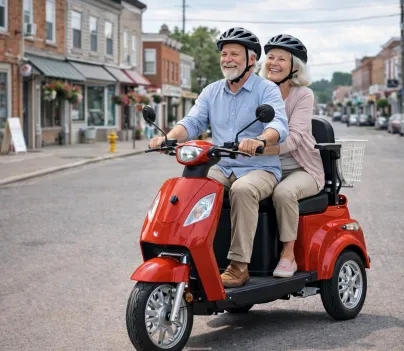
About a decade ago, with the emergence of low-power electric slow-speed vehicle technologies, mini vehicles with two, three, and four wheels were created—hereinafter referred to as mobility scooters—adapted for people who, due to health or age, could no longer drive cars. These vehicles became popular in Europe and Lithuania among seniors and people with limited mobility because they restored their ability to move around when age and health no longer allowed them to drive. The maximum speed of these slow-moving mobility scooters is comparable to that of a pedal bicycle—25–30 km/h—and their power reaches approximately 1–1.5 kW. Mobility scooters of this design and with these technical characteristics ensure a safe operating speed suited to seniors, sufficient power to climb hills, and the ability to travel in rural areas on relatively even gravel or dirt roads. These slow-speed mobility scooters are environmentally friendly and very economical. For many of them, the cost per kilometer traveled is only up to one cent. With the emergence of these scooters, seniors once again gained the opportunity to move independently, participate in social life, and travel without assistance to visit relatives, go into nature, or go to the store. These vehicles have become established in society and have become an indispensable aid in the lives of seniors.
Until the beginning of 2024 in Lithuania, the legal status of these slow-speed mobility scooters intended for seniors, as described in the Law on Road Traffic Safety, was clear—they were classified as “motor-assisted bicycles,” and all duties, responsibilities, and rules applicable to the driver of a motor-assisted bicycle or a regular bicycle also applied to the drivers of these slow-speed vehicles. Drivers of mobility scooters did not need a driver’s license or other related formalities. In 2024, after amendments to Article 40 of the Law on Road Traffic Safety (hereinafter LRTS) and the addition of the phrase “powered by human muscle” to the definition of a motor-assisted bicycle, drivers of these slow-speed vehicles intended for seniors found themselves in a legal gray area, because by function, design, and user they no longer fit any currently valid vehicle definition under the LRTS.
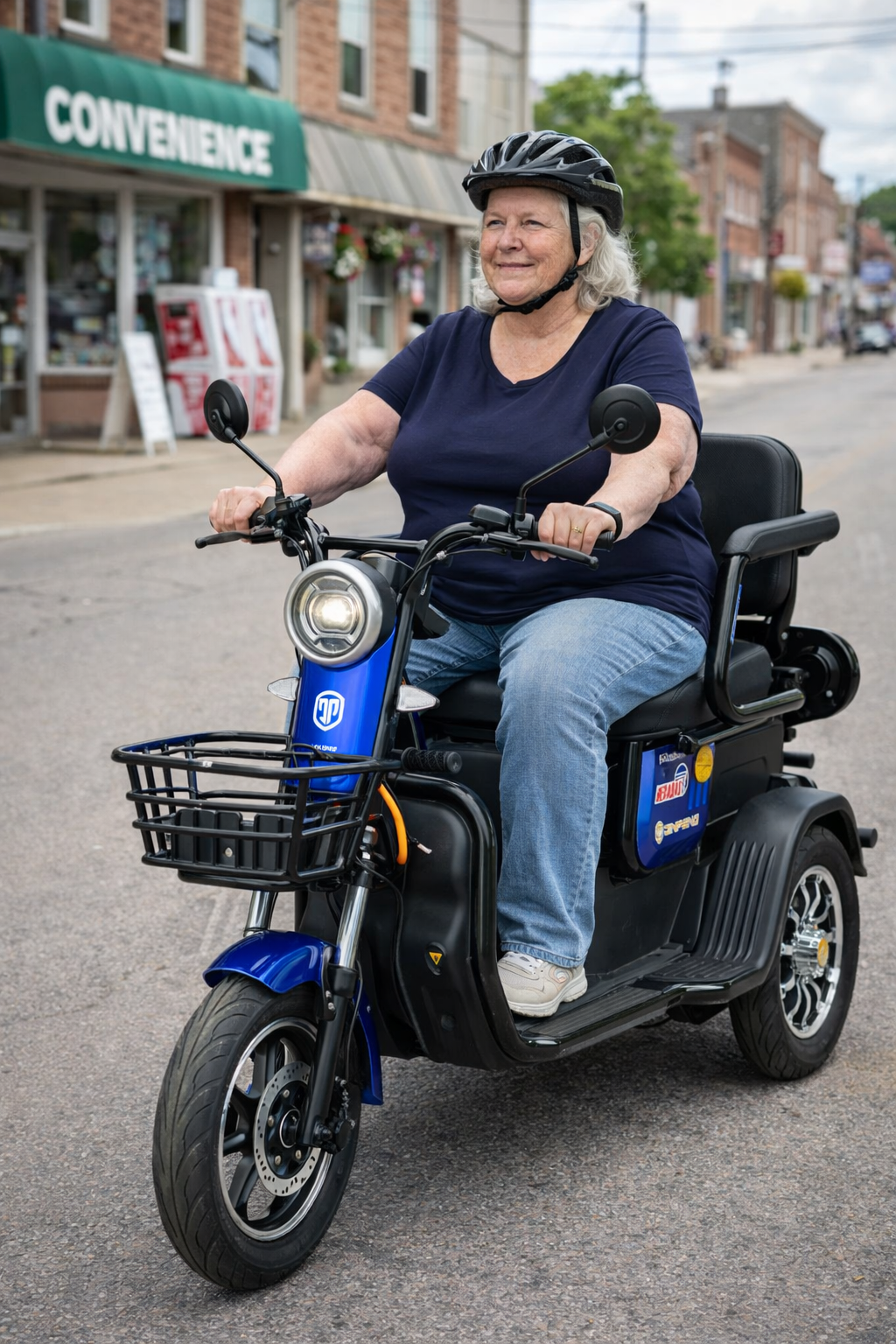
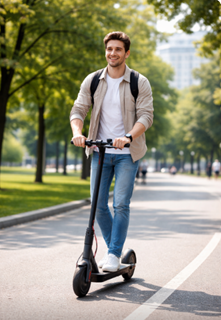
These mobility scooters for seniors cannot be classified as “micromobility devices,” because micromobility devices differ entirely from mobility scooters in terms of design, function, and user. Micromobility devices are described in Article 311 of the LRTS. They include electric scooters, electric skateboards, self-balancing unicycles, and hoverboards. The main function of these micromobility devices is to replace a large car or motorcycle over relatively short distances when a person travels alone. Their characteristic features are that they are lightweight and compact so they can be easily transported and stored without taking up much space at home or in the office. Many are ridden standing up. Their wheels and construction are oriented toward hard surfaces and lightness. They can be operated only by people with good body balance—essentially mostly younger people—which is not typical of seniors.
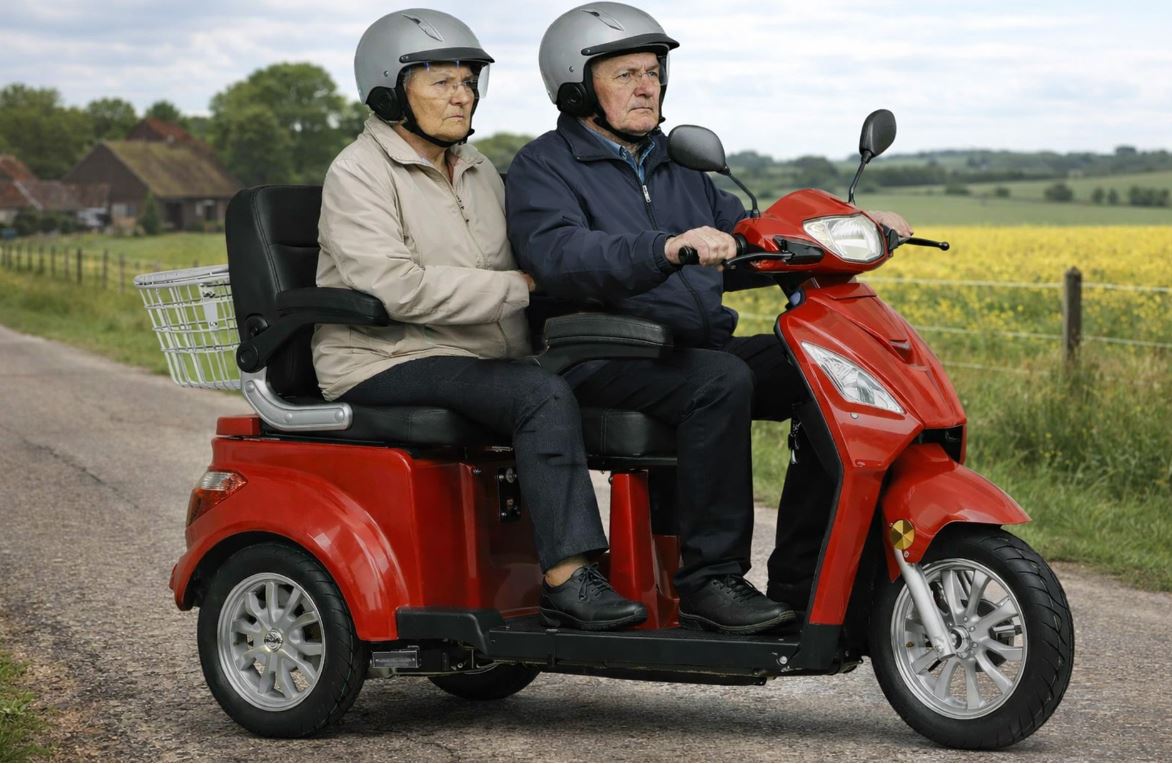
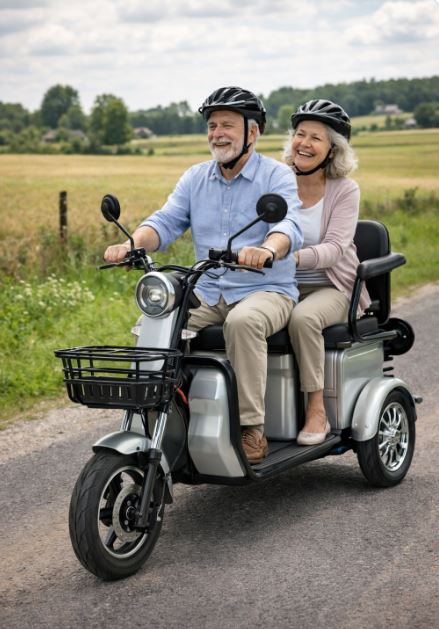
The main characteristics of mobility scooters for seniors are stability while driving, ease of control, seating comfort, and the ability to cover longer distances. For this reason, their construction and mass differ radically from micromobility devices. Many of them have stepped speed limitation so that a senior with certain physical abilities can set a safe maximum speed suitable for themselves. Many have a factory-installed passenger seat with armrests and stable foot support. This allows seniors to travel together and take care of one another. Traveling with a three- or four-wheel vehicle designed for seniors is much safer than riding together on a bicycle with a temporarily installed passenger seat. Taking seniors’ needs into account, many of them also have a factory-installed and tested mini cargo compartment that does not interfere with driving and does not reduce stability. Because of these features, electric scooters for seniors usually have greater mass than micromobility devices—typically 80–140 kg—and, unlike micromobility device users, a senior cannot carry or push them.
Mobility scooters for seniors cannot be classified as conventional quad bikes either. The Law on Road Traffic Safety defines three quad categories: “powerful quad,” “quad,” and “light quad.” In common understanding, the main function of a quad is recreational or sporting off-road driving, competitions, and sometimes performing light tractor-type work. Quads are mostly used in areas with limited accessibility where other vehicles cannot pass. Their design and characteristic features are as follows: the driver sits astride the seat and frame, holding on with their legs. The wheels are usually wide, with rough tires adapted for off-road use. The speed of conventional quads often matches that of a car.
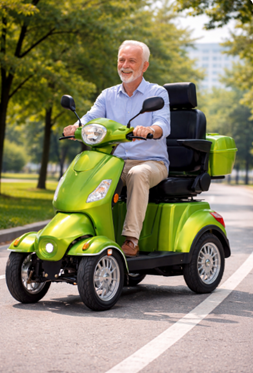
The function of a four-wheel electric scooter intended for seniors is to safely transport a person with walking difficulties from point A to point B at a low speed. These vehicles cannot travel fast, are not designed for off-road use, and cannot perform heavy work. Such four-wheel scooters are intended specifically for seniors who are particularly sensitive to changes in body balance and feel that a three-wheel scooter is not sufficiently stable. The construction is designed so that a person with walking difficulties does not need to swing their legs over a frame or seat when sitting down. Stability is ensured by the handlebar and seat, usually with armrests. The wheels and tires are narrow and adapted to relatively even, hard surfaces. Narrow tires are intended not for off-road use but for ease of control and economical travel.
Mobility scooters for seniors also cannot be classified as cars, because although the driver is less exposed than on a bicycle, they are still vulnerable, as they participate in traffic without being inside a motor-vehicle cabin. They also cannot be classified as motorcycles, as they are slow-moving. Operating such a slow vehicle in general traffic together with motorcycles and cars would pose a danger to the driver and other road users. As mobility scooters have become very popular in Europe, some manufacturers began installing more powerful controllers and motors in mobility scooter frames, allowing them to reach moped-level speeds above 25 km/h or higher. These were certified and received L2e-P or L6e-A type approvals. It is positive that with type approval the overall quality of such mobility scooters increased—for example, they acquired high-quality front and rear lighting typical of standard vehicles and certified braking systems. Nevertheless, for safety reasons, the maximum speed of most mobility scooters intended for seniors is limited by the controller to 25 km/h. It is difficult to imagine how such a slow-moving mobility scooter could, on a busy road where the permitted speed is, for example, 90 km/h, occupy the middle or left side of a lane under “moped” or “motorcycle” rules and travel at a speed suitable for it, such as 15 km/h. It is obvious that this would create traffic chaos and pose a threat to the senior.
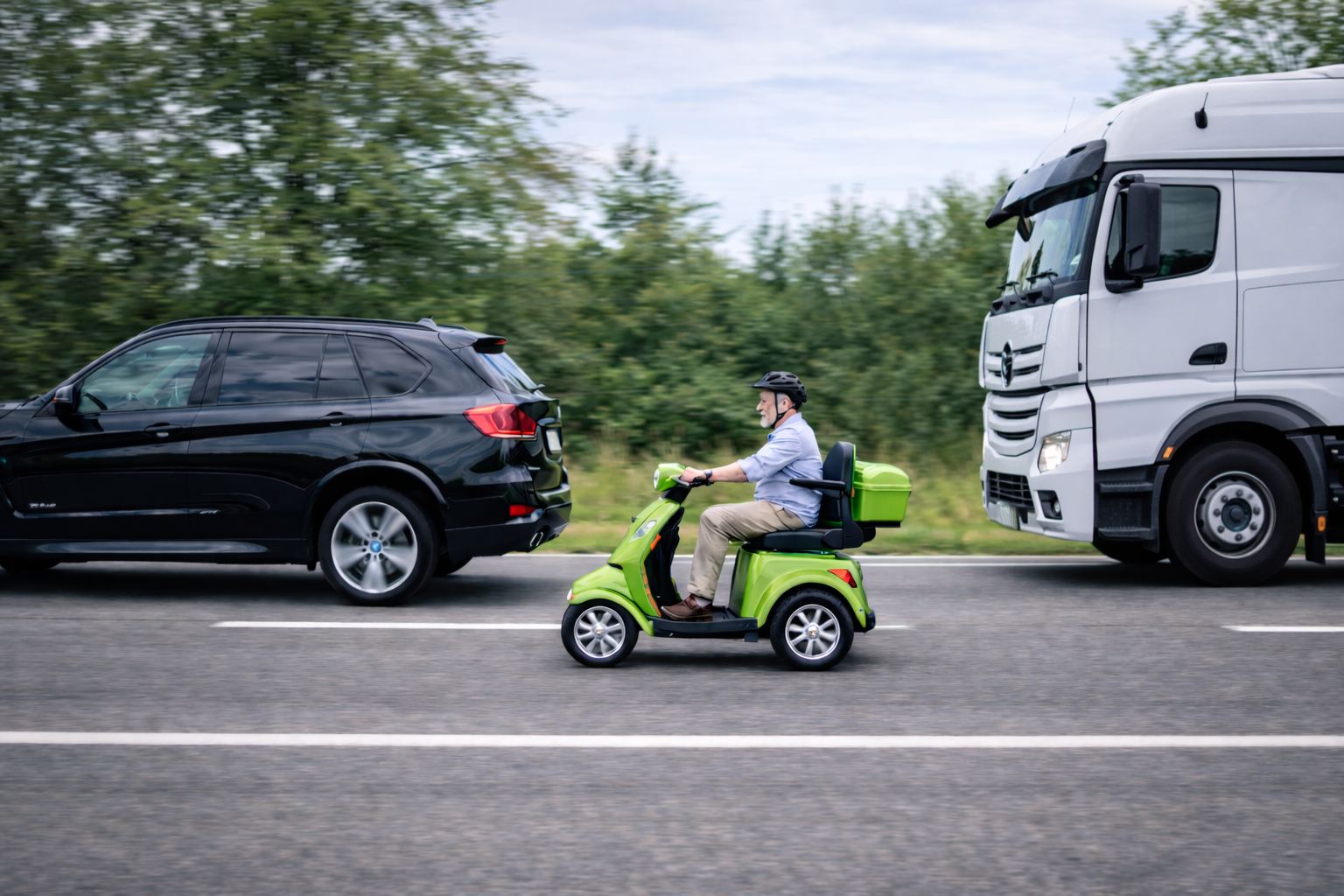
The time has come to redefine the legal framework for such vehicles in a way that ensures both the interests of seniors and the safety of themselves and other road users. Until the beginning of 2024, the duties, rules, and responsibilities assigned to drivers of such vehicles as “motor-assisted bicycle” drivers were logical and corresponded to traffic safety and the interests of seniors, except that the mass of these vehicles with a driver and passenger is greater than that of a bicycle. Therefore, it would be worthwhile to require drivers of such vehicles to limit speed to 6 km/h when passing pedestrians. If they need to cross a road, unlike cyclists or micromobility users, drivers of such vehicles cannot push or carry the vehicle across, so they should stop, allow all traffic participants to pass, and cross at permitted locations at walking speed.
In the current version of the Law on Road Traffic Safety, Article 171(5) and the Road Traffic Rules clause 66.10 state that if a vehicle is “similar” in design to an electric micromobility device or a motor-assisted bicycle and exceeds technical characteristics (25 km/h and 1 kW), it should be registered. Mobility scooters for seniors usually do not exceed these technical characteristics; however, by design and purpose they are not similar, and the word “similar” may be interpreted very differently. This creates even greater legal confusion and does not clarify what obligations a driver of a senior mobility scooter must follow.
Developed countries such as Germany, the Netherlands, and Sweden have established legal acts describing the rights and obligations of drivers of mobility scooters for seniors. These rules are similar to those applicable to cyclists, do not burden seniors with excessive requirements, and place strong emphasis on the safety of all road users. For example, in Sweden such mobility devices are classified as slow-moving (up to 25 km/h) Class II mopeds, to which simplified requirements similar to those for cyclists are applied. Registration and a driver’s license are not required. Mobility scooters for seniors may be used wherever bicycles are allowed, and drivers must follow cyclists’ duties.
In the Netherlands, the rules are more liberal: mobility scooters for seniors are allowed to travel at speeds exceeding 25 km/h. However, when riding on the sidewalk, the speed must not exceed 6 km/h. These are logical safety requirements that protect pedestrians. Registration and a driver’s license are not required. Riding is permitted both on roads and on bicycle paths. The aim is also to reduce seniors’ participation in general traffic as much as possible. Mobility scooters equipped with passenger seating are allowed to carry two people, which is particularly important for seniors. Mandatory scooter insurance applies everywhere, which is also logical, since in the Netherlands mobility scooters are considered vehicles with a width of up to 1.1 m and a mass of up to 425 kg. Importantly, they must not exceed 25 km/h. This is good legal practice that allows people with limited abilities to enjoy a better quality of life through independent mobility without creating traffic safety problems.
The current legal situation in Lithuania forces seniors or people with limited abilities to obtain a driver’s license and to travel in general traffic with their small, slow mobility scooters, even though this is unsafe. For those who can no longer hold or obtain a driver’s license, it effectively removes the possibility of using convenient, modern mobility devices altogether.
It should not be forgotten that in our society there is a large number of relatively young people who are considered healthy and are employed, yet due to limited physical or other abilities cannot pass the required tests or obtain a driver’s license. According to Eurostat data, 5.1 percent of people in Lithuania (more than 100,000 individuals) cannot afford to own a car due to financial difficulties. The country has about 620,000 people who have reached retirement age and about 161,000 people with joint, bone, or ligament impairments (stat.hi.lt). For a large share of these individuals, a mobility scooter that can safely operate under simplified rules is not only a good solution for independent mobility but a necessity.
We believe that in Lithuania it is essential to create or amend the relevant legal acts in order to ensure legal clarity, safeguard the well-being of seniors, and maintain traffic safety. As long as legal uncertainty exists, we recommend that mobility scooter drivers follow maximum traffic safety practices in accordance with the currently applicable provisions of the Law on Road Traffic Safety.
Taking into account the needs of our customers, our company has already applied to the Ministry of Transport regarding amendments to the Law on Road Traffic Safety. As soon as we receive information, we will publish it here.
REFERENCES
Netherlands law:
https://www.rijksoverheid.nl/onderwerpen/voertuigen-op-de-weg/gehandicaptenvoertuig
WE DRAW ATTENTION TO THE FACT THAT CURRENT LEGAL ACTS DO NOT GRANT OUR COMPANY THE RIGHT TO INTERPRET LAWS OR OTHER LEGAL ACTS; THEREFORE, THE OPINION PRESENTED IN THIS ARTICLE REGARDING LEGAL PROVISIONS CANNOT BE CONSIDERED AN OFFICIAL INTERPRETATION OF THE LAW.
All news